. . . the scholars at the conference invariably assumed that «gifts» do not really exist: Scratch deep enough behind any human action, and you’ll always discover some selfish, calculating strategy. Even more oddly, they assumed that this selfish strategy was always, necessarily, the real truth of the matter; that it was more real somehow than any other motive in which it might be entangled. It was as if to be scientific, to be «objective» meant to be completely cynical.
. . . Economists and Christian theologians agree that if one takes pleasure in an act of generosity, it is somehow less generous . . . To counteract this very perverse logic, Mauss emphasized the «pleasure» and «joy» of giving: In traditional societies, there was not assumed to be any contradiction between what we would call self-interest (a phrase that, he noted, could not even be translated into most human languages) and concern for others; the whole point of the traditional gift is that it furthers both at the same time.
David Graeber, “Give It Away”, in inTheseTimes.com; Chicago : In These Times, 21 august 2000 (excerpt La Litera información)
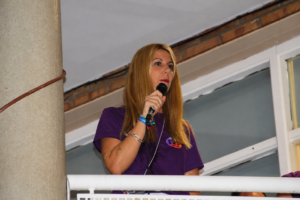
Tania Solans, diez años de trayectoria política: de la Alcaldía de Esplús a la candidatura al Senado
La alcaldesa de Esplús y presidenta de la Comarca de La Litera afronta una nueva etapa política tras más de una década vinculada a la gestión municipal. En 2016, cuando asumió la Alcaldía tras el fallecimiento de Eduardo Lalana, aseguraba que nunca se había imaginado en ese puesto. Diez años